Jul 6, 2008
A Picture’s Worth a Thousand Words
Posted by Derek and Shanna under Tanzania
3 Comments
Jul 6, 2008
Posted by Derek and Shanna under Tanzania
3 Comments
Jul 2, 2008
THE FOLLOWING IS A GUEST BLOG BY MIKE AND MINDY SONTAG, TWO OF OUR CLOSE FRIENDS FROM NASHVILLE WHO MET US IN TANZANIA FOR A SAFARI:
To some, the success of a game-viewing safari is measured by whether the safari-goers spotted all of the “Big Nine”: the lion, the leopard, the cheetah, the cape buffalo, the elephant, the black rhinoceros, the hippo, the zebra and the giraffe. As we made our way to the Ngorongoro Crater we had managed only six, lacking the cheetah, the black rhino and the leopard. If we were to achieve this feat, we would have only our days in the crater and the Serengeti to do so.
The Ngorongoro Crater is the most spectacular part of an area referred to as the “Crater Highlands,” which consists of a series of volcanic mountains and collapsed volcanoes, or calderas. The crater itself is a massive expanse of land that, at roughly fifteen miles wide, is one of the largest calderas in the world. It is an incredible sight; its steep walls create incredible blue-green vistas at every turn. The crater is also known for its massive collection of animals, with lions, cape buffaloes, wildebeest, zebras, elephants, and many, many other species roaming freely within its walls.
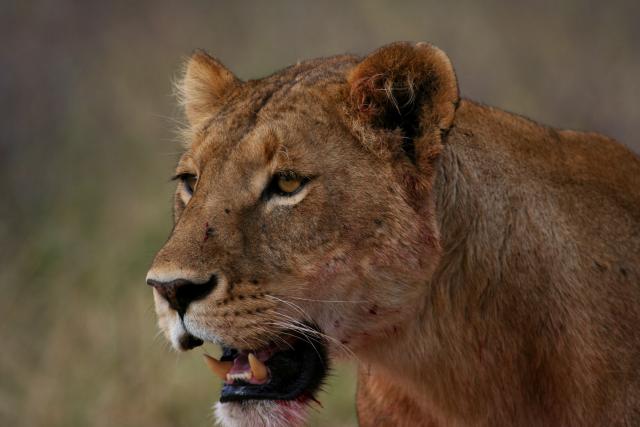
On our first morning in the crater, we all met at 6:30 am (yes, Shanna included) to get to the park before the masses had started their trek in the same direction. We were immediately greeted by the first of four separate spottings of lions, each providing its own spectacular opportunity to see these magnificent animals in their own environment. Our first viewing included two lionesses with six young cubs in tow taking full direction from their mothers. We then followed one of the lionesses as she began a hunt. We watched the zebras and wildebeests nearby snap to full alert when they sensed her presence. At one point, the lioness passed literally within a foot of our car, causing Derek to retreat with his camera from the window to the safety of the interior of the car (once again caught in stunning fashion on video by Shanna). While the viewing was awesome, we still had yet to see the remaining three members of the “Big Nine.”
As we continued our quest, we spotted two black rhinoceroses and a baby rhino in the distance, several hundred yards from our location, followed soon thereafter by a sighting of a cheetah, also in the distance. The next day, as we were making our way around the crater, we spotted another large male rhinoceros and noticed it moving toward the Lerai Forest, the place where most of the roughly 24 rhinos in the park call home. We positioned our car between the rhino and the forest and waited as the black beast made its way toward us. After stopping to determine his path, he passed between two vehicles and within 15 yards of our car. What a truly magnificent creature–one that seems more prehistoric in its stature than most. With just the Serengeti left to visit on our safari, we had only the leopard left on our Big Nine list.
The Serengeti National Park, an immense space of over 9,173 square kilometers, is best known as the location for the annual migration of wildebeest and zebras from their “winter home” in the southern portion of the Ngorongoro Conservation Area to their northern digs in the Masai Mara (a large reserve park just over the border in Kenya). While the migration typically takes place in late May and June, the dry season came early this year and we missed seeing it, which led to a fairly disappointing first day in the Serengeti.
One would think that, after 12 days spent wandering from park to park, seeing God only knows how many animals of every type and taking literally thousands of pictures, we would be completely burnt out and ready for a new location, away from the dust, the heat and the land rover. You would be entirely correct. Nonetheless, as we sat around the campfire on our final evening in the bush, a most unlikely plan was hatched for our final day of viewing, especially for those who know just how much Shanna enjoys her sleep: a pre-dawn trek into the Serengeti in search of the leopard, the only remaining of the “Big Nine” that had, as of yet, escaped our now keenly trained eyes for animal viewing.
It was clear that each of us, especially those of us with the competitive juices of lawyers, wanted to achieve this seldomly met goal. As it turned out, we were rewarded in spades with what was a perfect morning of game viewing–one where we would spot eight of the “Big Nine,” lacking only a further sighting of the black rhino, which doesn’t even inhabit the Serengeti. Shortly after leaving the bush camp, we were treated to a beautiful sunrise in the Serengeti. We then spotted two jackals in the midst of a fight. Soon after Mindy snapped a requested picture of the battling pair, we all spotted a cat leaping from the shelter of taller grass, roughly 100 yards to our rear. With lightning quickness, the cat–which our guide confirmed in excited tones to be a leopard–rushed from the field on our left to the field on our right. We had seen all of the Big Nine, along with many, many others.
Jun 27, 2008
Posted by Mike and Mindy Sontag under Tanzania
3 Comments
THE FOLLOWING IS A GUEST BLOG BY MIKE AND MINDY SONTAG, TWO OF OUR CLOSE FRIENDS FROM NASHVILLE WHO MET US IN TANZANIA FOR A SAFARI:
While seeing animals is fantastic, it can, at times, take on the quality of an exquisite art museum after having been to several exquisite art museums, where each painting of the Madonna appears like the last. With that said, however, you always seem to find some nuance in the animal viewing, much like each such painting has its own personal inspiration. In fact, we as a group and individually had several such instances along the way and came to expect – well – the unexpected.
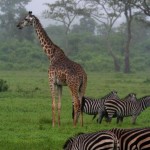
When we reached Arusha National Park after a long day a travel, the unexpected greeted us in the form of a gaggle of giraffes, two of whom were fighting for domination. We would spend the next two nights at the Hatari Lodge, which was built by Harvey Kruger, who starred in the John Wayne safari “classic,” Hatari. This was quite a change from the bush camp, with nine spacious bungalows, decorated in African art deco, each with its own fireplace.
Arusha Park is also known as “Giraffic Park” due to its large numbers of giraffe, which we saw in close proximity during a four-hour hike on nearby Mt. Meru. In order to take this hike, we had to employ an armed ranger to protect us in case we were threatened by any of the wild animals in the park. We were never aware of any danger as we walked among a family of giraffes, with their graceful strides and gentle faces, or as we hiked through a field with cape buffalo on one side and warthogs (which made Derek crave baby back ribs—they apparently taste like suckling pig) on the other.
We soon learned that taking such breaks from the “personal massager,” our guide’s nickname for the Land Cruiser (I would suggest personal “hell” might be more accurate), was important. We would, over the course of our safari, spend many an afternoon simply enjoying each other’s company instead of game viewing. With that said, during the next several days we had numerous instances of “unexpected” sightings of game that would reinvigorate us all from the monotony that game viewing can at times become.
Monkey Mayhem - Each evening at sunset dozens of vervet monkeys would emerge from their jungle homes to create what can best be described as “monkey mayhem” by climbing on top of (and, if given the chance, inside and around) the nine bungalows at the Hatari Lodge.
Born Free – Just as we thought another day would pass without spotting a big cat, we made our way through Tarangire National Park and noticed several vehicles, full of tourists with cameras and binoculars aplenty, parked alongside a dry river bed. We stopped and pulled out our binoculars. In the bushes across from us we saw a young lion eating a recent kill (a cape buffalo). As we scanned the area, we saw several lionesses lying in the dry river bed, then four young cubs playing in the grass close by. Then the papa lion, with his flowing mane, stood up from where he had been lying hidden in the tall grass and sauntered towards the lionesses. We had stumbled upon a pride of lions! We stayed there for an hour watching the cubs play with each other and then take a short break to run to mama and nurse as she lay stretched out in the grass. We saw the older lions take turns feeding on the kill, while the papa lion kept close watch over his family. Our guide, Lesika, told us it was rare to run across such a large pride (we counted about 12), feasting together on a recent kill.
Monkey Mayhem Part Two – Now feeling as though one of our viewing missions was complete, we headed back to our lodge in the middle of the park. Before we made it there, though, we ran across a large clan of baboons, well over a hundred in number, crossing the road immediately in front of our vehicle and engaging in all sorts of curious acts, some that would make you blush.
Charged By An Elephant – The next morning we began our journey to the Ngorongoro Crater. The trip began in spectacular fashion when we stopped to view an elephant family with two young elephants and apparently got a bit closer to the babies than the mother desired. She (all 8000 pounds of her) charged our car in spectacular fashion (all caught on video by Shanna).
The Pink Flamingos of Lake Manyara – We spent a few hours seeking out animals in the area around Lake Manyara. The highlight of our time there was the chance to see the lake covered with what could easily have been fifty thousand pink flamingos.
We quickly learned while on safari to expect the unexpected and to savor the unique sightings that each day inevitably held.
Google Video
Jun 24, 2008
Posted by Mike and Mindy Sontag under Tanzania
3 Comments
THE FOLLOWING IS A GUEST BLOG BY MIKE AND MINDY SONTAG, TWO OF OUR CLOSE FRIENDS FROM NASHVILLE WHO MET US IN TANZANIA FOR A SAFARI:
After nine months of tracking Derek and Shanna’s journey on this blog, we were thrilled to finally join them in Tanzania. Mindy planned the itinerary, all Derek and Shanna had to do was meet us in Arusha, near Kilimanjaro, with very little prior knowledge about what the next eighteen days would hold.
Tanzania, unlike other parts of Africa, including neighboring Kenya and Rwanda, has for the last twenty years been free of religious and ethnic conflicts. While the economic culture has been one of rampant poverty, and the HIV/AIDS epidemic exists here as it does in other parts of Africa, the people have found a way to find happiness in a society dominated by a culture accustomed to living off the land, and where a person’s net worth is often measured by the size of the herd he owns or the land he cultivates.
Tanzania has also reaped the rewards associated with a vibrant tourism industry that takes advantage of its numerous and diverse regions, from the valley between Mt. Kilimanjaro and Mt. Meru, to the plains of the Serengeti, and its roughly 430 species and subspecies. The ability to view these animals in their native habitats in the numerous parks, game reserves and conservation areas was why Mindy and I chose Tanzania to meet Derek and Shanna, and where we rekindled our friendships and where we began our search for “The Big Nine” - elephant, leopard, lion, black rhino, cape buffalo, giraffe, zebra, cheetah and hippo.
Our safari began at Hemingway’s Bush Camp in the Olmalog Game Reserve in the foothills of Mt. Kilimanjaro, in the area where Ernest Hemingway hunted and from where he wrote “The Snows of Kilimanjaro.” Our guide for the duration of our safari was Lesika, and our mode of transportation a Land Cruiser, with which we would all develop a love/hate relationship, as it would provide us access to incredible game viewing and picture-taking opportunities, as well as carry us for hours across unpaved roads bouncing us around uneven terrain and kicking up enough dust to create a visible film on our bodies.
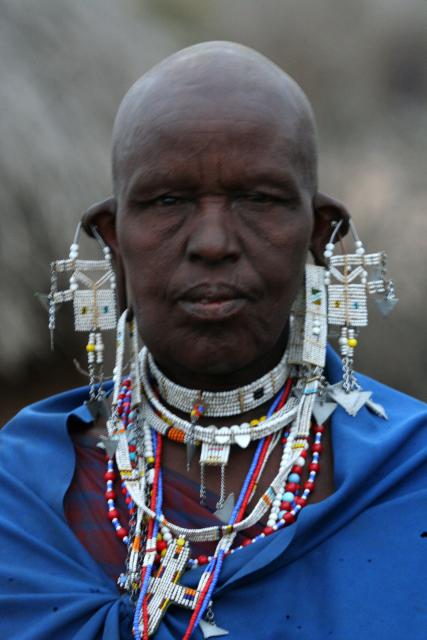
The advantage to being on the game reserve, as we would later discover, is the ability to go “off -roading” in search of wild animals in the arid land. We were free to wander about as we wished, being guided only by our desire to get the next best shot (cameras only, however). We were also able to get amazingly close to all the elephants and zebras wandering only yards from our vehicle. It turns out that elephants have a tremendous sense of smell and hearing, but terrible eyesight, and so as long as we stayed downwind from them we could get close enough to almost touch them. We were also able to trek into Kenya for a bit, and at one point embraced each other with one foot in Kenya, and one in Tanzania. At night we returned to our tents for bucket showers with water heated over an open fire, and a delicious meal served by a campfire. Our entertainment was provided by the Masai tribe we had visited; clothed in their pastoral bright red garments, they danced, jumped and chanted by the firelight.
Google Video
Jun 14, 2008
Posted by Shanna under South Africa
1 Comment
As we drove through South Africa, we met a lot of locals who were eager to hear which parts of their country we’d seen already and which ones we were planning to visit next. Upon hearing our schedule, a lot of them said something along the lines of, “Just wait until you get to Cape Town. You’ll love it.” How right they were.
I loved our time in Cape Town so much that I’m afraid I’ve become a bit evangelical about the place. (If you know me personally (or maybe even if you don’t), be prepared for me to try to convince you to go there as soon as you possibly can.) Why I am such a fan of Cape Town? This short list just scrapes the surface:
(1) Its natural wonders are both incredible and incredibly close by. Table Mountain is right in the middle of town, more or less. It serves as both a beautiful addition to the skyline and a fantastic vantage point from which to look out over the city. We rode a cable car to the top of the mountain and spent a happy couple of hours wandering along its well-maintained trails and trying to wrap our minds around the fact that the mountaintop is completely flat. Afterwards, we headed over to Signal Hill to watch the sun setting over the Atlantic Ocean and the city lights slowing turning on. Gorgeous.
Speaking of gorgeous, less than an hour outside of Cape Town lies the Cape of Good Hope Nature Reserve. We took a very, very windy hike along the rocks above the park’s spectacular coastline and ended up at the Cape of Good Hope itself. Although it’s often given credit as such, the Cape of Good Hope isn’t the southernmost part of Africa (that honor goes to Cape Agulhas, a little bit to the east). The Cape of Good Hope is, however, the southwesternmost point. That phrase may not look as good on a t-shirt, but it’s something…
On the way to the nature reserve, we stopped at Boulders Beach, which is famous for being home to a colony of 3000 penguins. These penguins were formerly called “jackass penguins,” which is not a reflection on their character, but rather on the donkey-like noise they make. They’ve recently been upgraded to a new name and are now simply called “African penguins.” The walkways along the beach allowed us great views of the penguins, who seemed to be very used to the presence of humans. (We even had the opportunity to swim with the little cuties. Seeing as how it was about 55 degrees, however, we passed.)
(2) It’s an incredibly cosmopolitan city. As such, it has all the gourmet food, excellent shopping and, err, dirty martinis anyone could ever want.
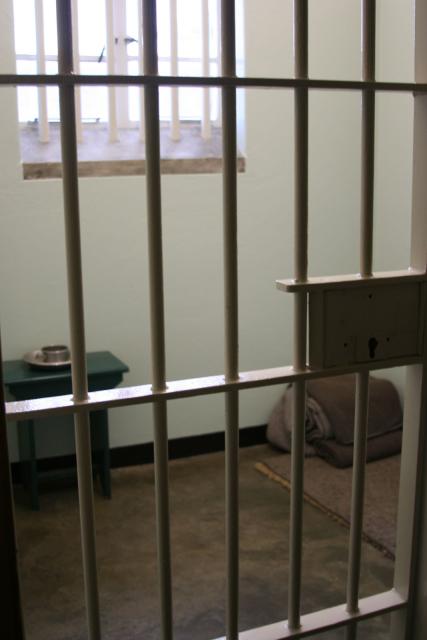
(3) Its tragic history has been shaped into lessons for future generations. While in Cape Town, we visited Robben Island, home of the prison in which Nelson Mandela spent 18 of his 27 years of imprisonment. (The entire island is now a museum.) Our bus tour–sadly, there’s really no other way to see the island–took us past the lime quarry where Mandela and other prisoners slaved in the heat. We were then led through the prison and to Mandela’s cell by, amazingly enough, a man who was incarcerated on the island for 7 years because of his work with the African National Congress. Our guide had some amazing stories to tell about his time on the island, and he seemed remarkably able to talk about his experiences without getting angry.
We also stopped in at the District Six Museum, a moving museum about a once-vibrant, diverse neighborhood that was bulldozed during apartheid in an attempt to turn the district into an all-white area. Some 50,000 people were forcibly relocated to what were essentially slums. Many of the people who were evicted from their homes have returned to the museum to mark on a map the location of their former houses and nearby landmarks. Since democracy arrived in South Africa, the government has prioritized the rebuilding of District Six and the return of its land to its former residents, but its progress has been slow.
(4) It’s–finally!–diverse. We have been shocked at how racially divided South Africa is. We were happy to see that, in Cape Town, people of all races seem to mix more easily. It was a really nice change.
If those reasons aren’t enough to convince you to make the trip, I’ve got plenty more…
Google Video
Jun 10, 2008
Posted by Derek under South Africa
Comment on this Post
Getting in a car with virtually no plan in sight is a luxury in which few of us seem to indulge these days. With limited vacation time, today’s traveler seems to plan every minute of their trip, making sure they make the best out of every moment. During our 30 days on the road in South Africa, we’ve felt like we’ve been on a different trip from the prior 9 months. Having our own wheels has allowed us to avoid the stresses of booking flights, boarding buses and trains and following the schedules of the transportation industry. It’s been a refreshing change.
The last week has been one of the highlights of our road trip. After finishing our hike along the Wild Coast, our only future obligation was to catch a flight out of Cape Town 9 days later. So we hit the road and started heading down the coast. The South Africa tourism industry has named the 300 or so miles of coastline east of Cape Town the “Garden Route.” While there is a notable absence of gardens along the route, the scenery is stunning - steep, majestic mountains just a few miles from an endless stretch of empty, white-sand beaches.
Our first stop on our drive was Jeffrey’s Bay, world-famous for its surfing. Surfers from around the world come to J-Bay to test their skills on the massive waves that consistently pound its shores. Although neither of us surfs (a fact that pains us both), we wanted to see talented surfers in action. The next morning, we walked down to “Supertubes,” a particularly famous surfing beach - it’s said to play home to the “perfect wave” - near our hostel. We’d picked a good time to be there - dozens of surfers were busy putting the guys in Point Break to shame.
Full of envy, we loaded up the car and drove west until arrived at a coastal town called Knysna. With the help of our guidebook and our cell phone, we were able to find an amazing hotel right on the Knysna lagoon for a fantastic low-season price. 1 With an incredible view of the lagoon right from our hotel balcony, we felt very little incentive to stray far from our room.
After a couple of days doing virtually nothing in Knysna, we continued to head east toward Cape Town. While we had planned on going to Hermanus for a cage-dive with great white sharks, it was cancelled due to windy weather. We called an audible (something you can’t really do without your own car) and headed to Franshhoek. Set in a valley surrounded by mountains, Franshhoek is famous for the superb wine made in the area and shipped around the world. Again, we consulted or guidebook, negotiated low-season discounts and found ourselves in a top-notch hotel for a very reasonable price. We spent the next day touring some of the local vineyards and having a couple of meals at world-class restaurants that cost a fraction of what they would back home. I’m not sure either of us has ever been this relaxed…
Google Video
Jun 6, 2008
Posted by Shanna under South Africa
1 Comment
Hard-working folks in South Africa’s big cities have plenty of options to turn to when they need a break. Among the best are the Drakensberg Mountains (just a few hours from Durban) and the Wild Coast (an hour or so from East London). Given that we’ve been on a break for, err, the last nine months or so, we’re not really in need of much R & R, but we decided to check them out anyway. (Tough life, I know…)
The Drakensbergs, or “Dragon Mountains,” are the second-largest in Africa. They’re broken up into three sections, the Northern, the Central and the Southern. We chose the first, primarily because of the Amphitheater, its most famous attraction. A five-mile-long wall of towering rock, the Amphitheater is flanked by two 10,000-foot mountains, and it’s gorgeous. We spent a day hiking over rolling hills to the rocky gorge at its base and were rewarded with stunning views and a perfect spot for a picnic.
A few days later, we continued our hike, this time along the Wild Coast. The Wild Coast stretches for 200 miles along South Africa’s southeastern coast and houses remote coves, endless sandy beaches and some of the most interesting people in the country. Great swaths of the area are inhabited by the Xhosa, whose name is pronounced with a clicking sound that we are incapable of making. (The Xhosa language itself contains an amazing 15 different kinds of clicks!) The Xhosa are some of the most superstitious people around. Many of them believe in witchcraft, and it’s not uncommon for them to burn women whom they consider to be witches. Deceased ancestors are a very important part of Xhosa culture; they serve as go-betweens between living Xhosa and the gods.
This last fact is an important part of the incredible circumstances that led to the near-demise of the Xhosa people in the 1850s. In 1856, a teenage girl named Nongqawse went down to the banks of a stream (which we walked past on our hike) to help keep birds away from her uncle’s fields. When she returned, she announced that she had met with the spirits of her dead ancestors, who told her that they had a way to help the Xhosa people recover from the hard times in which they’d recently found themselves. (At the time, their cattle were dying en masse from European diseases and their chiefs were weary from trying to defend their territory against the land-hungry Boers.)
As the story went, if the Xhosa people demonstrated their belief in the spirits of their ancestors by slaughtering their cattle and refusing to cultivate their fields, the ancestors would reward them by returning from the dead, doubling the number of their cattle, multiplying their stores of grain and rendering old people young again. For many people, this was a way to salvation. Over 100,000 believers slaughtered their cattle and abandoned their fields. A significant number of nonbelievers, however, refused to. The ancestors never showed up, and a large percentage of the believers slowly starved to death. Many were sold into slavery by the British governor of the province. Today, some Xhosa (including one of our guides along our walk) believe that their ancestors refused to return because of the nonbelievers’ failure to abide by their instructions.
Many Xhosa live in an area of the Wild Coast known as the Transkei, which is an apartheid-era “homeland” to which black people were forced to relocate during the sad decades leading up to the 1991 liberation. Nelson Mandela, a Xhosa himself, was born and raised here.
Today, both the Transkei and the Wild Coast’s beaches are largely uninhabited. We hiked along the beach for almost three days and encountered very few people, other than our guide and the staff who ran the guesthouses in which we stayed every night. What we did see were dolphins gliding through the waves (it seems they like to “surf”), cows using the shoreline as a salt lick, a shipwreck with a funny story behind it (watch the video for more details) and even, lucky for us, a whale. There are few things in the world that I like more than walking on the beach, and I’m happy to say that, after days of doing nothing but, I may have had my fill–at least for a little while…
Drakensberg:
Wild Coast:
Google Video
Jun 2, 2008
Posted by Derek under South Africa
2 Comments
After an article was written about us and our trip in The Tennessean, the local paper in Nashville, we received hundreds of comments and e-mails from readers encouraging us as we traveled and providing recommendations for things we should see and do on our journey. None have proved as valuable as one we received from a Nashville reader who sits on the Board of Directors of an orphanage in South Africa. When she saw South Africa on our itinerary, she suggested that we visit the orphanage if we were in the area. Ten months later, we arrived at the Sihawukelwe Lauren Children’s Home (SLCH) in Umzinyathi, a small, rural town in the Zulu area of eastern South Africa.
SLCH was started a few years ago to help address an increasing problem in South Africa - children orphaned due to the death of their parents from AIDS. South Africa plays home to more people with AIDS (many of whom have kids) than does any other country. A report we heard on local radio in South Africa (and later confirmed online) stated that there are more than 1,200,000 AIDS orphans here. This fact is particularly difficult for Westerners to understand. While the risks of AIDS are still very real in the West, education and various social programs have proved fairly effective in preventing the widespread dissemination of the disease. Unfortunately, this is not so in many parts of Africa.
While government education programs to reduce the risk of AIDS exist in Africa, many of these programs have failed to make a significant dent in the problem. Multiple factors have collided to cause this failure, including illiteracy, strong cultural dynamics and massive misinformation. The president of South Africa himself has suggested that AIDS is caused by “poverty.” South Africa’s health minister advocates a diet of garlic, olive oil and lemon to cure AIDS. (Despite calls by scientists for her resignation, she remains in her post today.) Finally, according to people we’ve met during our time here, some Africans (hopefully only a few) believe that AIDS was brought to Africa by the West in order to kill off all Africans. So, in short, there are a lot of obstacles to effectively combating this deadly, widespread disease.
SLCH was opened after a group of Nashvillians learned of some of these problems and of the incredible toll they were taking on the Umzinyathi community. They reached out to the community in a big way, providing funding for a new Children’s Home that currently houses 18 children (with room to accept more children in the future), most of whom have lost their parents to AIDS.
We were fortunate to spend two days and nights at the home. During our time, we helped the SLCH staff purchase winter clothes for the children (remember that, because South Africa is in the Southern Hemisphere, it’s almost winter here now!), some needed items for the home and art supplies and soccer balls for the kids. After we discovered that over a hundred books had been donated by the Nashville community but were locked away in a separate building inaccessible to the children, Shanna, a voracious reader, made it her mission to create a library in an empty room in the home. It was a unique feeling to flip through books in a small Zulu village that had once been read by children back in Nashville.
The greatest joy of our time at the home was talking and playing with the kids. We were shocked at how disciplined, mature and inquisitive they seemed to be (and, as you’ll see in the video, what amazing dancers they are!). It was easy to forget the tragic losses that the children have all recently endured, losses that have amazingly been eased by the generous contributions and dedication of a small group of Tennesseans thousands of miles away.
Google Video
May 28, 2008
Posted by Shanna under South Africa
1 Comment
I left India’s Andaman Islands last December convinced that I had just experienced the best scuba diving in the world. At that point, I’d only been certified for a few months, but I’d been diving enough to recognize what was just ok and what was stunning. Three dives in South Africa’s Sodwana Bay redefined for me just what “stunning” meant.
Our lack of a waterproof camera case means that I don’t have photographic evidence of our time under the sea, but I’ll sum it up like this: it was like swimming in a huge, pristine aquarium. During our second dive, the water was so clear that our vision was virtually unlimited–that almost never happens. And so we fell in love with Sodwana Bay’s underwater world.
Sodwana Bay is part of South Africa’s St. Lucia Wetland Park. As it turns out, St. Lucia has a lot to offer out of the water as well. A Unesco World Heritage Site, the park protects five different ecosystems, from coral reefs and beaches to lakes, wetlands, woodlands and coastal forests.
We spent some time in St. Lucia Estuary exploring a few of the ecosystems. Drifting down the estuary (an estuary is like a river, only it has brackish, rather than fresh, water), we explored St. Lucia’s wetlands and the crocodile and hippo families they contained. A note about hippos–did you know that they’re the deadliest animals on earth?!? 60% of all people who are killed by animals are killed by hippos. And the thing I can’t figure out is this–hippos are vegetarians! They don’t even eat the humans they crush with their gigantic teeth. As the woman who ran our B&B in St. Lucia put it, “I guess they’re just really cranky!”
Walking among the sand dunes the next day, we reveled in the fact that we had miles of gorgeous beachfront all to ourselves. (The beach was so clean and the sand so hard-packed that the clouds were actually reflected on the shoreline–amazing!) To get to the beach, we had to drive through a wildlife reserve where, once again, we were able to see zebras and warthogs in their natural environment. Later that day, we stopped in at the Crocodile Center. We were able to see all kinds of crocs close up, if not exactly in their natural habitats. We’ve been getting so spoiled by South Africa’s incredible outdoors that it’s going to be really hard for us to leave this amazing place!
Google Video
May 25, 2008
Posted by Derek under Swaziland
Comment on this Post
If you’re like me, you probably know very little, if anything, about Swaziland. In fact, the only mention of this small country throughout my travels came from a kayaker we met a few months back in Laos; according to him, Swaziland had some great white water rafting. Leaving Kruger National Park and heading toward the coast, we decided to take a short 2-day detour through this enigmatic land.
Since gaining independence from the British in 1968, this tiny country bordered by South Africa and Mozambique has been ruled by a succession of kings. Unlike many remaining monarchs in today’s world (like those in England and Thailand), the king of Swaziland is the ruler of the land - an absolute monarch. The current king, King Mswati III, has 13 wives; his predecessor, King Sobhuza II, had over 120 wives and over 600 children! The royal family has several palaces around the country. It’s good to be the king.
Other than beautiful landscapes, raging rivers and prolific wildlife, Swaziland’s current - and less praiseworthy - claim to fame is HIV/AIDS. It has the highest HIV infection rate in the world; approximately 39% of Swazis are HIV positive! 39%! According to a recent survey, 25% of Swaziland’s population is predicted to be DEAD from the disease by 2010, and already over 60,000 children have lost either one or both their parents to AIDS! It’s impossible to process these numbers. Luckily, the king and his government seem acutely aware of the massive problem and prevention measures and campaigns are widespread.
With only one full day in the country, we opted to follow the advice of our kayaking friend and hit the river. Unlike most rafting trips I’ve been on, Shanna and I would be paddling our own raft. While I’ve done many trips like this before on the Nantahala River in North Carolina, the Usutu River made Nantahala look like the creek in your backyard. Within a few minutes, we arrived at the first major rapid, inexplicably named Monica Lewinsky. Monica was fierce and I was quickly evicted from the raft. Once afloat, we worked on our paddling skills and achieved an expert rhythm. This didn’t prevent a later rapid from consuming our boat and once again throwing me, this time accompanied by Shanna, into the cold, crocodile-infested river.
As we were nearing the end of our outing, our guide - who was as concerned about our safety as he was about the NHL playoffs (i.e., not at all) - instructed us to park our rafts on the bank and walk ahead to scout our last rapid. As we approached the furious rapid, we knew the guide was joking; no sane individual would allow novices to raft this section of the river. When no punchline was delivered and we began walking back to our rafts, thick fear enveloped us - horrific injury or possible death was only seconds away. We approached the rapids just as instructed, but we were both immediately launched out of our boat. The next 10 seconds have been lost from my memory, but I know they involved me losing a paddle and gaining about 10 bruises on my legs as we bounced against rocks as if we were in a pinball machine. Our only consolation was that the other 4 boats on the river with us succumbed to the river in the same fashion. We were in Swaziland for less than 48 hours, but the marks it left on us will remain for weeks.
Google Video