
The memories are so numerous that they almost blend together. Not a day goes by, however, without something triggering a vivid recollection of an experience we had during our year abroad. And then, for a minute, weâ€ re transported back to someplace a world away–and a world apart from the lives we live now.
We know that we are privileged beyond belief to have completed such an unbelievable journey. The wisdom we gained can never be taken away from us. The shared experiences and challenges we faced deeply strengthened our marriage. Our respect for different cultures and the appreciation we now have for our own country could not be stronger.
While we’ve been lucky to see more of this beautiful world than most, we have still just touched the surface. There is so much more to see and experience–enough to fill several lifetimes. We can’t wait to continue the exploration!
To provide a short overview of our one-year journey around the world, we have created a slide show of some of our favorite pictures. Enjoy!
[vimeo 36505600]
]]>We’ve stayed in touch with quite a few of the other long-term travelers we met on the road, and they had lots of advice for us as we made the transition back into “real life.” As it turned out, pretty much everything they warned us about turned out to be true. They cautioned us that very few people would be interested in stories about our trip, and that some would not even question us about it. This wasn’t at all true for us in the first couple weeks, when we were catching up with those who know us well and followed along with this blog, but we’re finding now that the vast majority of the new people we meet don’t seem to be very curious about our travels at all.Â
More often than not, any mention of our travels is met with blank stares. People here are less likely to have traveled themselves and, therefore, less likely to ask about it–the same way that we’d probably be reluctant to inquire about something that we don’t understand very well. (Derek runs into a fashion designer. Silence ensues…). This is a big change from life on the road, where everyone was genuinely interested in our adventures, most likely because they were traveling themselves and, like us, wanted suggestions about where to head next. On the road, the first questions people ask each other after they exchange names are “Where have you been?” and “Where are you going?” Here, it’s virtually always “What do you do?” During our year on the road, we heard the “What do you do?” question literally less than five times. That’s a big adjustment.
Our fellow long-term travelers also warned us that we’d miss each other once we were no longer spending every minute together. And we do. After 366 days of almost no alone time, we now have it in spades. Shanna’s new job often keeps her at the office fairly late, so we sometimes only get to see each other for an hour or two before it’s time for bed. That’s a huge change, and one we’re having trouble getting used to.
In better news, though, we’ve enjoyed many of the perks of a more settled life. It’s nice to wake up in the same place every morning and to always know where the bathroom is. It’s great to have food in the refrigerator so we don’t have to eat out all of the time and to be back in a familiar culture, where we rarely have to worry about whether we’ve just unintentionally but seriously offended someone. It’s good to have an address and a phone number and the feeling that we’re starting to build a life here.Â
And parts of our new life reflect things we learned from the trip. We’re far more likely now to seek out adventure, and we’ve already taken a couple of quick trips outside of the city. (A couple of weeks ago, we spent a day on the Chesapeake Bay, devouring (and we DO mean devouring–we have the Old Bay-stained shirts to prove it…) piles of delicious Maryland blue crabs.) More than anything, our travels have provided us with invaluable perspective on life. We recognize and are deeply grateful for the amazingly blessed life we have here in the USA and know that we are capable of overcoming virtually any challenge that presents itself.Â
From time to time, we’ll ask each other this question: “Someone offers you the chance to leave tomorrow morning and do the whole trip again. Do you take it?” We’re split on that decision. We’ll leave it to you to figure out who’s ready to grab a backpack and head out the door.
]]> After visiting 40 countries over a period of 366 days, we are leaving for the airport in a few minutes to board our final flight of the trip–one destined for Nashville, Tennessee. By the end of the day today, we’ll be home. It’s hard to even estimate the number of times we’ve thought about this day–about how it will feel to step off that plane onto U.S. soil, about what it will be like to hear English spoken everywhere we go, about how nice it will be to talk to our loved ones in person, rather than over email. Now that the day is actually here, it feels a bit surreal.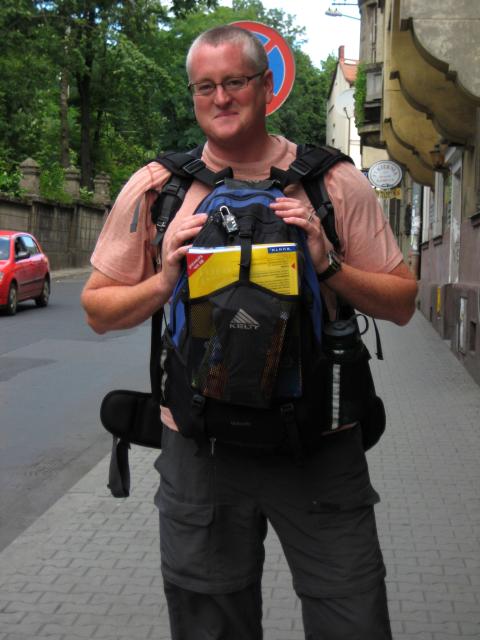
We already know that the experiences we’ve had over the past year are usually reserved for fairy-tales. The things we’ve seen, the people we’ve met and the challenges we’ve overcome are difficult for us to even comprehend. In fact, as we look back at some of the pictures over the past year, it’s hard for us to even believe that they ever really happened. The trip has gone far better than we could have ever imagined. We’ve been incredibly blessed and lucky–as well as safe–at every turn. While we are incredibly excited to get home, we are also overwhelmingly sad to be leaving our journey behind us. We know that it has been a defining moment of our lives.
It’s hard to come to grips with the fact that it will soon be part of our past. We will spend the next two weeks visiting friends and family in Nashville and Rochester, Michigan before driving to Washington, DC in mid-September to start our new lives. During that time, we will post several entries about our return home and our post-trip reflections on the past year, and we’ll make sure to share some of our favorite pictures, too. Stay tuned!
]]> Even people who have never been to Provence, France probably have a pretty good idea about what it looks like; images of the lovely region in Southeast France are everywhere at home. Nashville has a chain of bakeries with the Provence moniker, and of course there’s the fancy soap and lotion store that you can find in almost every shopping mall (and, as it turns out, in countless upscale shopping areas around the world) called L’Occitane en Provence. Whether they’re selling bread or bubble bath, the stores conjure up images of fields of lavender, stone houses with colorful shutters and a world painted in yellows, blues and purples.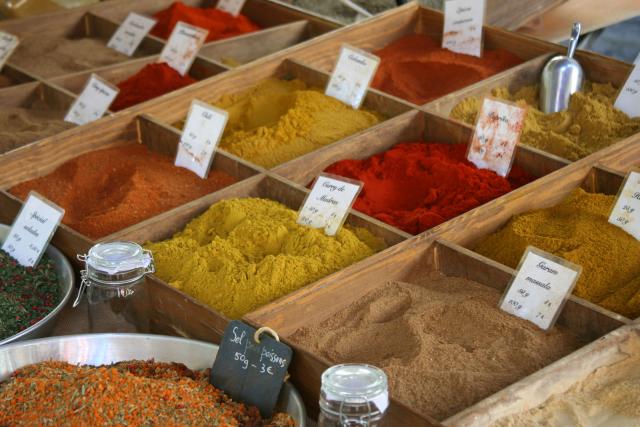


We fell so in love with Provence while we were there that I wouldn’t be surprised if we find ourselves wandering into the bakeries and shops at home that have adopted its name, hoping for another little taste of the places we enjoyed so much.
[embedplusvideo height=”350″ width=”450″ editlink=”http://bit.ly/1r6dNW5″ standard=”http://www.youtube.com/v/ih62jyG6OvQ?fs=1″ vars=”ytid=ih62jyG6OvQ&width=450&height=350&start=&stop=&rs=w&hd=0&autoplay=0&react=1&chapters=¬es=” id=”ep9546″ /]
]]>

Derek and I had both been to Monte Carlo years ago, and we decided to take a look around to see if all was still as we remembered it to be. We stopped by the tourist information office to get a map, and then we got stuck in some kind of Monaco vortex. Within 30 minutes, we were inexplicably checking into a hilariously over-priced hotel and trying to decide where to have dinner that night. Consulting frommers.com (a great resource for people who love food as much as we do), Derek read out some restaurant options. A French place with a coat-and-tie dress code. Nope. Another French place whose entrees were priced starting at $125. Not so much. An American-themed sports bar that served Tex-Mex. No way. We decided to venture into town without a plan, spend the afternoon exploring the area and worry about dinner later. We changed into our fanciest clothes, which is to say I put on Billabong flip-flops and a cotton sundress with a broken zipper and Derek donned something out the of the pages of the REI catalog, and headed out the door.

Monte Carlo has a few tourist activities, but its people are by far its most interesting attraction. It has got to be the best place on earth to people-watch, and that’s exactly what we wanted to do. We found just the place–a busy cafe right in front of the casino with a prime view of the U-shaped street where Beautiful People cruised, revving the engines of their luxury cars and enjoying the envious sighs of the Unwashed Masses who looked on. A table opened up at the cafe just as we arrived, and I made a beeline for it. A few seconds later, a living version of Monte Carlo Barbie and her pal, Ken, both of whom were clad in matching shades of shiny pink, approached and glared at me with such a sense of entitlement that I determined that I must have somehow stolen their table (which, as it turns out, was not even close to being true). While putting this in print makes me cringe with embarrassment, I admit now that I turned and fled. Even from a distance, I could feel their disgust with my choice of footwear.

Happily, another spot (with an even better view–take that, shiny table thieves!) opened up fairly quickly, and Derek and I settled in to watch the veritable parade of luxury. Old men in white linen sauntered toward the casino with women who could only have been supermodels on their arms. A pack of olive-skinned teens, one of whom was sporting a fedora, loitered on the corner, each with a cellphone attached to his ear. They all shared space with an endless parade of Ferraris, Lamborghinis and even the occasional Rolls Royce. We laughed at one guy who was driving a shiny, red Ferrari while wearing a red Ferrari hat. Brand overload, perhaps? (Walking around town later that evening, we discovered the reason for the man’s brand-redundant hat: he was the Ferrari rental guy. He accompanied poor, sportscar-less souls who were willing to shell out about $120 for a quick spin around town in an Italian masterpiece.)

After a couple of hours spent trying to make one $22 drink last long enough to justify our presence at the cafe without requiring us to buy another one, we found ourselves suffering from Monaco overload. We fled back to our hotel room and gave ourselves a quick Don’t-Even-Begin-To-Think-You-Can-Afford-To-Play-Alongside-These-People reality check, and then we revisited our dinner options. This time, the $8 plate of nachos available at the American sports bar sounded pretty darn good. And you know what? They were.
!
!
]]>



[embedplusvideo height=”350″ width=”450″ editlink=”http://bit.ly/1pAC4kB” standard=”http://www.youtube.com/v/yQ-n22p5bJM?fs=1″ vars=”ytid=yQ-n22p5bJM&width=450&height=350&start=&stop=&rs=w&hd=0&autoplay=0&react=1&chapters=¬es=” id=”ep4341″ /]
]]>
The naps sounded like a pretty good idea to us, so when we read about an opportunity to follow in the farmers’ footsteps without actually trespassing in their fields, we signed right up. The experience is called a hay bath, and it’s more or less exactly what it sounds like. We showed up at a local spa, where a technician directed us into separate rooms, each of which contained what looked like a bathtub with a mattress suspended over it. When it was my turn, the technician covered the mattress with warm, wet hay and instructed me to lie down on it. Err, ok. After I did as I was told, she covered everything but my face with more of the same, then wrapped me in blankets, then plastic and then pushed a button that lowered the mattress directly into the bathtub, which, as it turned out, was filled with hot water. (A couple of strategically placed pillows ensured that my head never went under, a fact for which I was quite grateful.) Then she left to attend to Derek.

The whole thing was pretty cozy, and the heat from the water released the smell of the hay, which was delightful. Just as I was starting to think that I’d rather be out of the tub than in (it was hot in there!), the technician reappeared, pushed a button that lifted the mattress up and out of the water, freed me from the hay, and again wrapped me in blankets, where I remained, coccooned, for a happy and very warm 45 minutes. When it was all over, I felt ridiculously relaxed, although I didn’t notice any of the medicinal effects that a hay bath is supposed to deliver. Still, though, I think those farmers are on to something. Perhaps hay baths are headed to a spa near you…


From Slovakia, it was on to Slovenia, where our first foray into the natural world took us into what felt like the bowels of the earth. We were in the Skocjan Caves, a series of underground chambers covered in stalactites and stalagmites whose bright coloring reflect the myriad minerals they contain. A river ran through the last cave in the series, and we had to cross it via a dizzying bridge that I really wish we could’ve captured on film. (Sadly, taking pictures in the caves is not allowed.)

After the caves came Lake Bled, Slovenia’s most popular tourist destination, and for good reason. Watched over by a towering castle, the blue-green lake wraps itself around a tiny, perfect island, on top of which sits a tinier, more perfect church. Unsurprisingly, the church is a popular setting for weddings.  Some 99 stairs connect the lakeside dock with the church, and it’s said that grooms often try to prove their “fitness” for marriage by carrying their brides up the entire flight. When I suggested to Derek that he attempt the feat, he became very interested in photographing the family of swans that make their home on the water’s edge.

Slovenia’s Julian Alps were our final destination in Eastern Europe, and they turned out to be one of the our favorite places in the world. Named after Julius Caesar, the Alps occupy Slovenia’s northwest frontier with Italy and its northern border with Austria. (In fact, in one mountain town we visited, we were just a five-minute walk away from both countries.) We spent most of our time in the Alps in a small town called Bovec, which is in the valley (the Soca) that witnessed the World War I battles that became the setting for Ernest Hemingway’s A Farewell to Arms. (Hemingway drove an ambulance for Italy during the war.)

Looking around at the incredible scenery, it was kind of hard to to believe that anyone could retain the will to fight in the midst of beauty like this. The ridiculously turquoise Soca River courses down the Alps and into the verdant valley below. It is joined by another river, the Susec, which has carved out the canyon that served as a veritable waterslide for us during our first-ever attempt at an adventure sport called, accurately, “canyoning.” Donning neoprene bodysuits, aquasocks, helmets and plastic diaper-looking things that allegedly make it easier to slide over the rocks but are potentially there only for the amusement of our guides, we climbed up part of a mountain (not a tough hike overall, but made much more difficult by the fact that were were wearing not shoes but aquasocks) and then slid and jumped our way back down to the bottom. The experience was exhilarating, only a little scary and–like so much of what we’ve seen in Eastern Europe–highly recommended.
High Tatras, Slovakia
[embedplusvideo height=”350″ width=”450″ editlink=”http://bit.ly/1r6dRoV” standard=”http://www.youtube.com/v/OjihqntS9lQ?fs=1″ vars=”ytid=OjihqntS9lQ&width=450&height=350&start=&stop=&rs=w&hd=0&autoplay=0&react=1&chapters=¬es=” id=”ep1906″ /]
Julian Alsp, Slovenia
[embedplusvideo height=”350″ width=”450″ editlink=”http://bit.ly/1r6dNW5″ standard=”http://www.youtube.com/v/ih62jyG6OvQ?fs=1″ vars=”ytid=ih62jyG6OvQ&width=450&height=350&start=&stop=&rs=w&hd=0&autoplay=0&react=1&chapters=¬es=” id=”ep6119″ /]
Google Video
]]>